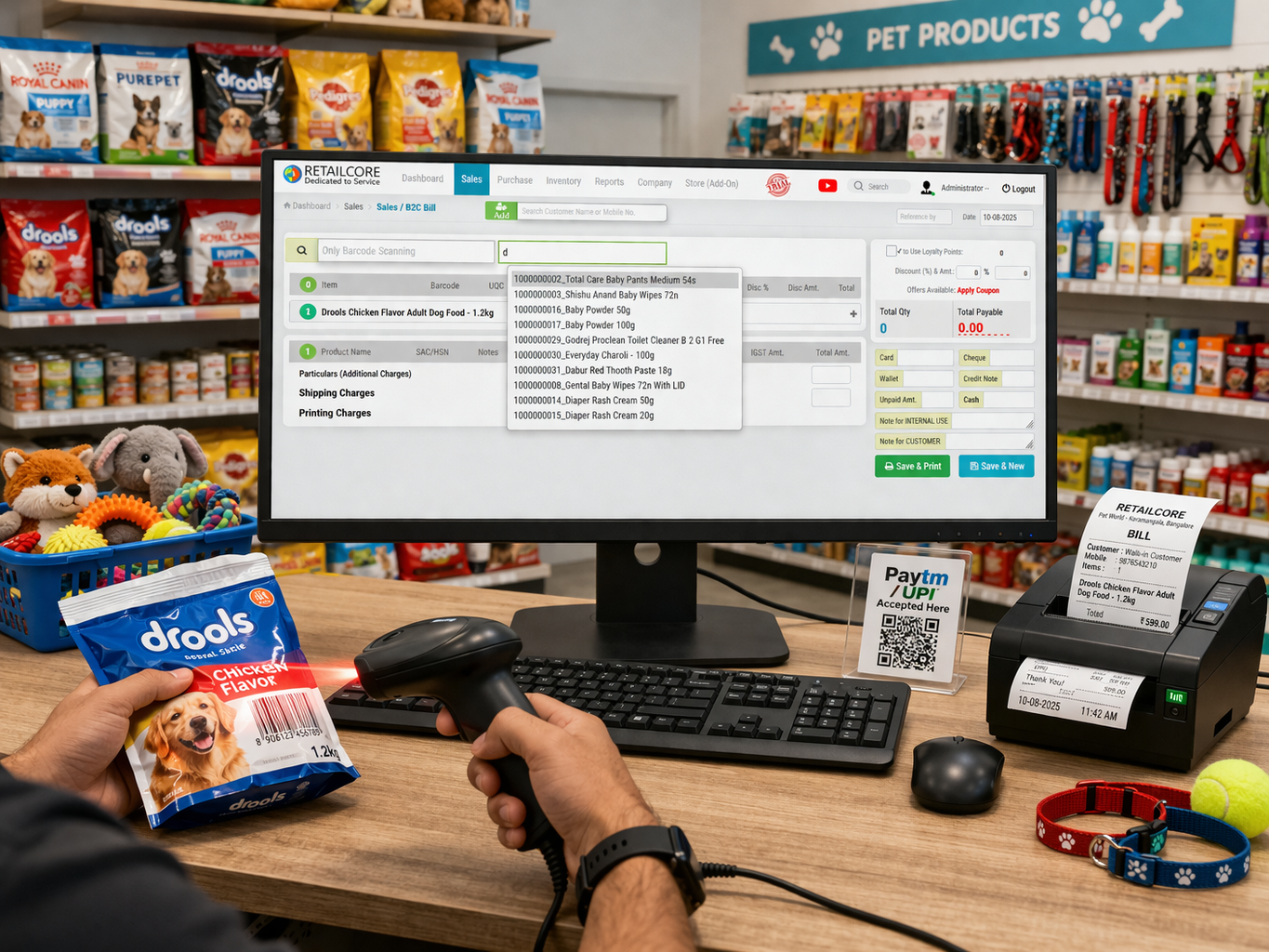
One of the biggest hidden problems faced by retail store owners is not low sales.
It is dead stock.
Across India, retailers often invest lakhs of rupees in inventory, hoping products will sell quickly. But many products remain unsold for months and sometimes years.
This problem affects:
- Boutiques in Surat
- Gift stores in Ahmedabad
- Toy stores in Mumbai
- Cosmetics retailers in Bangalore
- Dry fruits stores in Delhi
- Pet stores in Pune
When products do not move, money gets blocked.
🔥 Book Free Demo of RetailCore
What Is Dead Stock?
Dead stock refers to products that remain unsold for long periods and occupy valuable shelf space and working capital.
Examples include:
- Old fashion collections in boutiques
- Unsold Diwali gift boxes
- Slow-moving cosmetics
- Outdated toys
- Premium pet accessories with low demand
- Seasonal dry fruits inventory
Many retailers believe:
Unfortunately, every day unsold inventory remains on shelves, it blocks money that could have been invested in fast-moving products.
The Hidden Cost of Dead Inventory
Most store owners only think about the purchase cost of inventory.
But dead stock creates several hidden losses.
1. Blocked Cash Flow
Suppose ₹5 lakh worth of products are sitting unsold.
That money cannot be used for:
- Buying fast-moving products
- Expanding inventory
- Marketing
- Opening a new branch
2. Shelf Space Is Wasted
Slow-moving products occupy shelves that could be used for profitable products.
3. Excessive Discounting
Retailers often offer heavy discounts simply to clear inventory.
Margins suffer and profitability decreases.
4. Wrong Purchasing Decisions
Without proper reports, retailers may unknowingly purchase products they already have.
Why Dead Stock Happens
Buying Without Data
Many retailers purchase inventory based on:
- Assumptions
- Emotions
- Supplier pressure
- Memory
Without sales reports, wrong buying decisions become common.
Inventory Confusion
If inventory visibility is poor, retailers cannot distinguish:
- Fast-moving products
- Slow-moving products
- Dead stock
As a result, duplicate purchases increase.
Seasonal Inventory
Festive collections often become dead stock after the season ends.
Examples include:
- Diwali gift packs
- Wedding collections
- Christmas decorations
- Winter clothing
Poor Stock Visibility
Many stores still rely on memory or Excel sheets.
Without accurate inventory reports, problems remain hidden.
Case Study: Boutique Store in Surat
A women’s boutique in Surat had built a large inventory over several years.
Business looked healthy from the outside.
However, after reviewing inventory, the owner discovered nearly ₹5 lakh worth of products were moving very slowly.
Problems included:
- Duplicate purchasing
- Old collections occupying shelves
- Poor visibility into fast-selling products
- Blocked working capital
How RetailCore Helped
- Barcode inventory improved visibility
- Sales reports identified slow-moving products
- Stock audits highlighted excess inventory
- Future purchasing became data-driven
Ready to Improve Cash Flow and Reduce Dead Stock?
Discover how RetailCore helps retail stores improve inventory visibility, identify slow-moving products, and make smarter buying decisions.
🚀 Book Free Demo of RetailCore
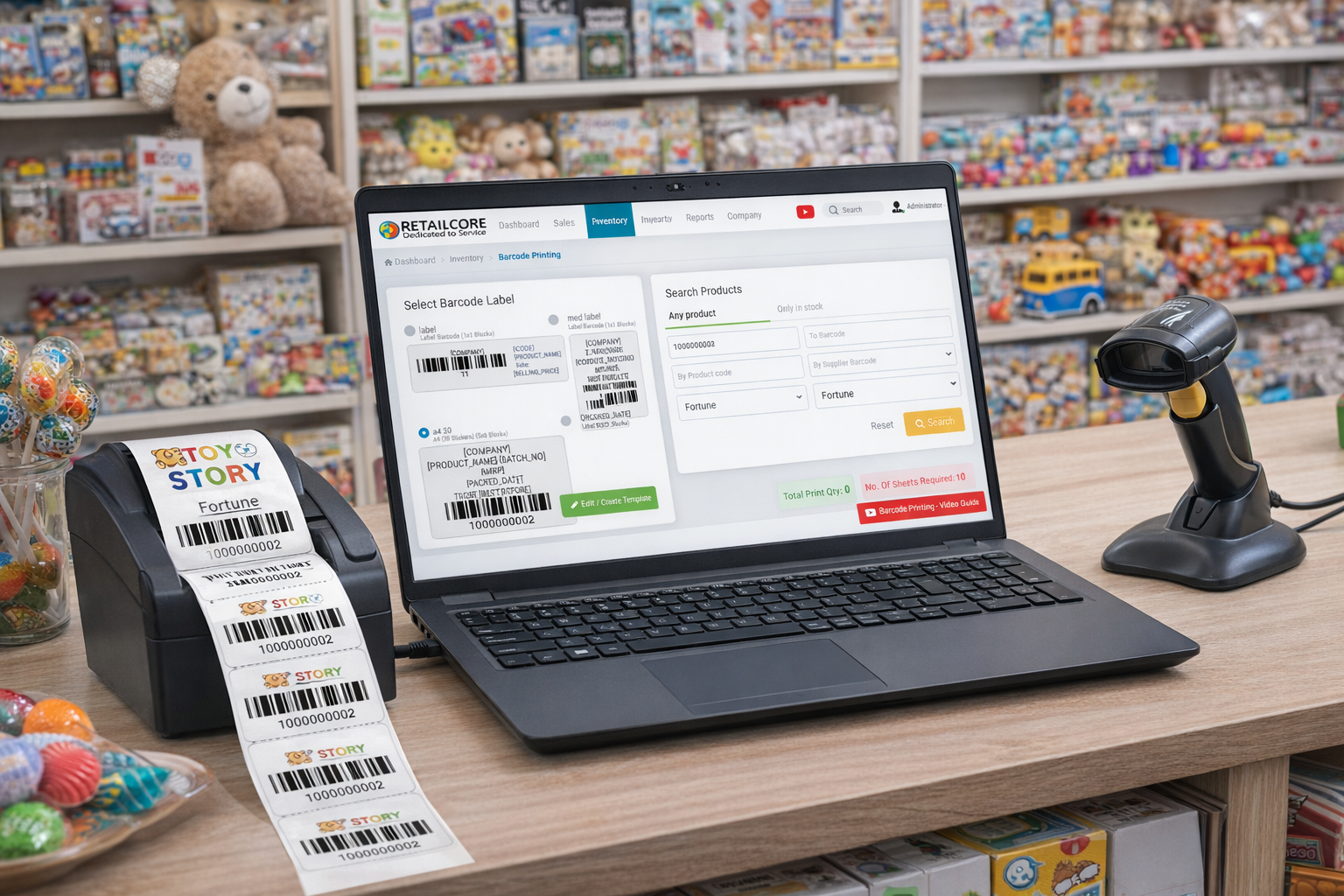
Toy Store Billing Software India | Inventory, Barcode, Multi-Store Retail Management
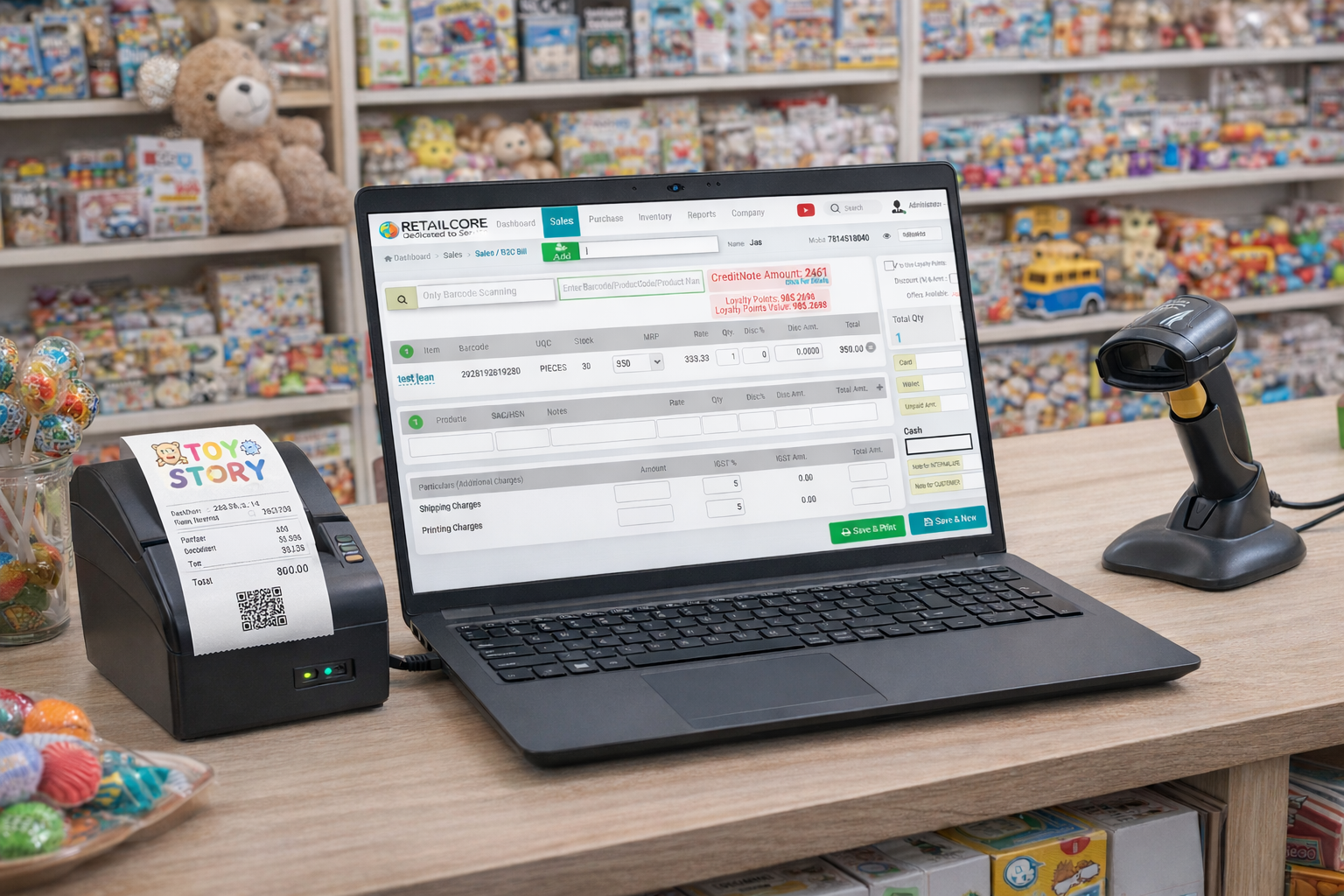
टॉय स्टोर के लिए बिलिंग सॉफ्टवेयर | इन्वेंटरी, बारकोड और मल्टी-स्टोर मैनेजमेंट