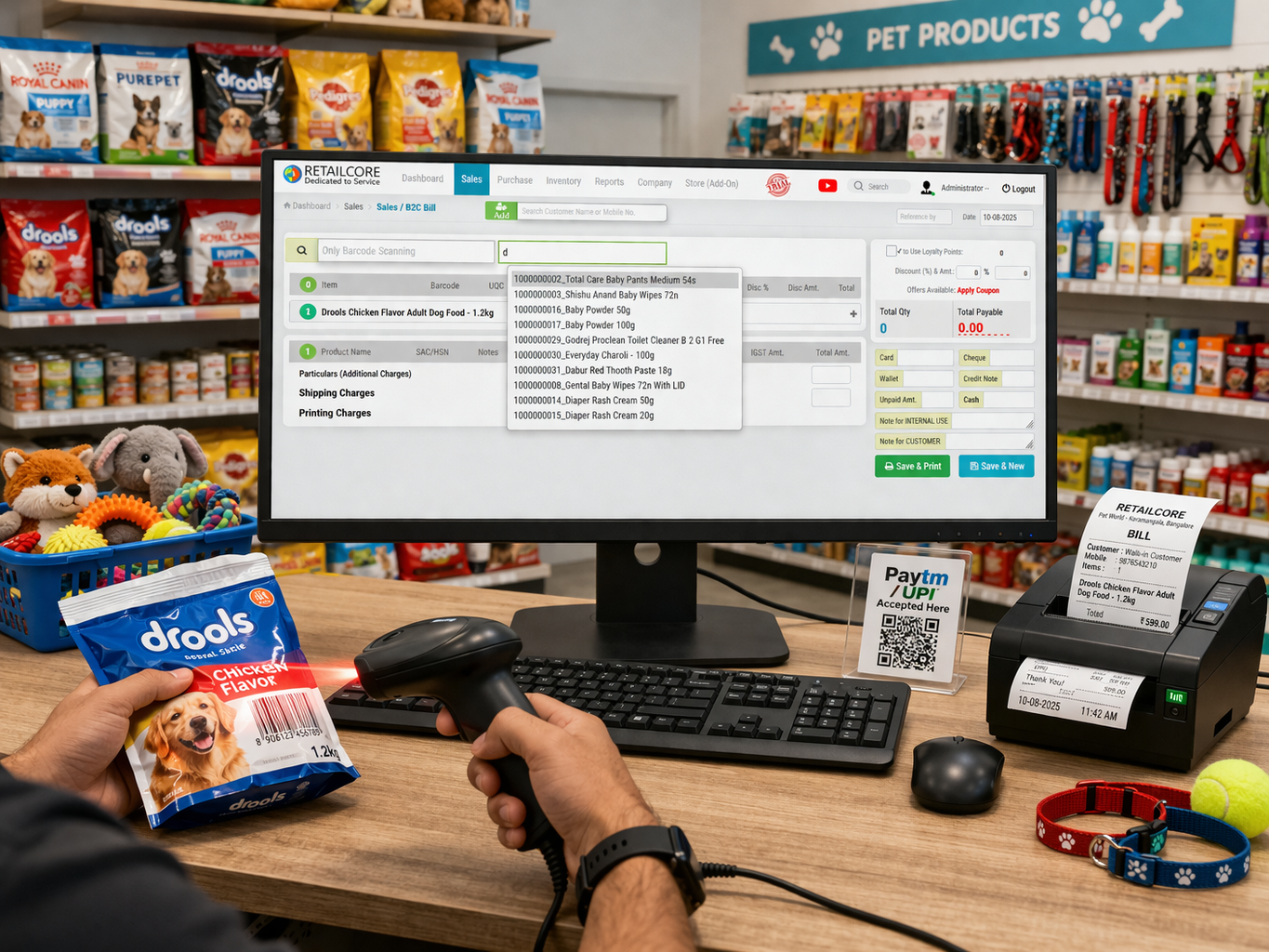
The Complete Guide for Modern Retail Businesses
Many retailers believe that increasing sales is the fastest way to improve profits. While higher sales are important, one of the biggest opportunities for improving profitability often lies inside the store itself—in the inventory sitting on shelves.
Unsold inventory ties up valuable capital, occupies shelf space, increases storage costs, and prevents retailers from investing in products that customers actually want to buy.
Whether you operate a boutique, supermarket, cosmetics store, toy shop, gift shop, footwear showroom, jewellery business, or a chain of retail outlets, effectively managing dead stock can significantly improve your cash flow and overall business performance.
What You’ll Learn
- What dead stock is and why it occurs
- The difference between dead stock and slow-moving inventory
- How dead stock affects profitability and cash flow
- How to identify inventory problems before they become expensive
- Retail best practices to reduce excess inventory
- How barcode inventory management helps retailers stay in control
- How RetailCore helps businesses optimize inventory efficiently
What is Dead Stock?
Dead stock refers to products that remain in inventory for an extended period without being sold and are unlikely to generate revenue without corrective action.
These products continue occupying valuable shelf space while locking up business capital that could otherwise be invested in faster-selling products.
Dead stock can occur in almost every retail industry, including fashion, footwear, cosmetics, gift shops, electronics, supermarkets, dry fruits, toys, jewellery, stationery, home décor, and mobile accessories.
Example
A boutique purchases 500 winter jackets expecting high seasonal demand. Due to unusually warm weather, changing fashion trends, or inaccurate demand forecasting, only 150 jackets are sold. The remaining inventory occupies valuable space for months and reduces available working capital.
Dead Stock vs. Slow-Moving Inventory
Many retailers mistakenly treat slow-moving inventory and dead stock as the same thing. Although they are related, they require different business decisions.
| Slow-Moving Inventory | Dead Stock |
|---|---|
| Products continue selling occasionally but at a lower rate than expected. | Products have stopped selling or have extremely low demand. |
| Can often be improved through promotions or merchandising. | Usually requires clearance, bundling, discounts, or inventory liquidation. |
| Still contributes some revenue. | Locks business capital without meaningful returns. |
Understanding the difference allows retailers to make informed purchasing and pricing decisions instead of treating all unsold inventory the same way.
Why Dead Stock is More Dangerous Than Most Retailers Realize
Many business owners view unsold inventory simply as products waiting for future customers. In reality, dead stock quietly affects nearly every aspect of a retail business.
1. Working Capital Gets Locked
Every unsold product represents money that cannot be invested in new inventory, marketing campaigns, store improvements, or business expansion.
2. Cash Flow Becomes Tight
Healthy cash flow keeps a retail business running smoothly. Excess inventory reduces liquidity and can make it difficult to purchase fast-moving products when customer demand increases.
3. Valuable Shelf Space is Wasted
Shelf space is one of the most valuable assets in any retail store. Products that do not sell prevent retailers from displaying merchandise with higher sales potential.
4. Inventory Carrying Costs Increase
Storage, insurance, handling, maintenance, and stock management all increase the true cost of unsold inventory over time.
5. Products May Become Obsolete
Fashion trends change. Technology evolves. Packaging gets redesigned. Seasonal products lose relevance. The longer inventory remains unsold, the greater the risk of losing value.
The Hidden Cost of Dead Stock
Dead stock affects far more than inventory reports. It has a direct impact on profitability, customer satisfaction, operational efficiency, and long-term business growth.
| Business Area | Impact of Dead Stock |
|---|---|
| Cash Flow | Capital remains locked in unsold inventory. |
| Storage | Additional warehouse and shelf space required. |
| Customer Satisfaction | Popular products may be unavailable while slow products occupy display space. |
| Purchasing | Reduced ability to purchase high-demand products. |
| Profitability | Higher carrying costs and reduced inventory turnover. |
How Barcode Inventory Management Helps Prevent Dead Stock
One of the biggest reasons dead stock develops is the lack of accurate inventory visibility. Retailers relying on manual registers or spreadsheets often struggle to identify which products are selling quickly and which remain untouched for months.
A barcode-based inventory management system records every purchase, sale, stock adjustment, and transfer, providing retailers with up-to-date inventory information.
With timely inventory reports, store owners can identify slow-moving products earlier and take action before they become dead stock.
RetailCore Helps Retailers Stay Ahead
RetailCore provides retailers with barcode-based inventory management, product-wise sales reports, category analysis, inventory tracking, barcode label generation, stock audit tools, purchase management, and business reports that help identify inventory trends before they become costly problems.
Take Control of Your Inventory
Discover how RetailCore helps retailers reduce dead stock, improve cash flow, optimize purchasing decisions, and maintain accurate inventory with barcode technology and intelligent business reports.
Frequently Asked Questions
1. What is dead stock in retail?
Dead stock refers to products that remain unsold for a long period and are unlikely to sell without corrective actions such as promotions, bundling, markdowns, or liquidation. These products occupy shelf space and lock valuable working capital.
2. What is the difference between dead stock and slow-moving inventory?
Slow-moving inventory continues to sell occasionally, although at a lower rate than expected. Dead stock has little or no demand and usually requires stronger actions to recover value or free up storage space.
3. Why is dead stock harmful for retail businesses?
Dead stock reduces cash flow, increases storage costs, occupies valuable shelf space, lowers inventory turnover, and limits a retailer’s ability to invest in products that customers actively purchase.
4. Which retail businesses are most affected by dead stock?
Dead stock can affect boutiques, supermarkets, gift shops, toy stores, cosmetics retailers, jewellery stores, footwear stores, dry fruit retailers, stationery shops, home décor stores, electronics retailers, and many other businesses.
5. How can barcode inventory management reduce dead stock?
Barcode inventory management provides accurate, real-time visibility into stock movement, helping retailers identify slow-selling products early, improve purchasing decisions, and maintain accurate inventory records.
6. Can dead stock be converted into profitable inventory?
Yes. Retailers can reduce dead stock through promotions, bundle offers, seasonal campaigns, store transfers, discounts, and improved merchandising while using sales reports to identify inventory trends.
7. Does RetailCore help identify slow-moving inventory?
Yes. RetailCore provides inventory reports, product-wise sales analysis, barcode inventory tracking, category reports, and business insights that help retailers identify slow-moving and non-moving inventory.
8. Why is inventory visibility important?
Inventory visibility enables retailers to understand what products are selling, what remains in stock, and where corrective actions are needed before excess inventory becomes dead stock.

How Retail Stores Can Reduce Dead Stock and Improve Cash Flow
How to Measure Billing Performance in Your Retail Store