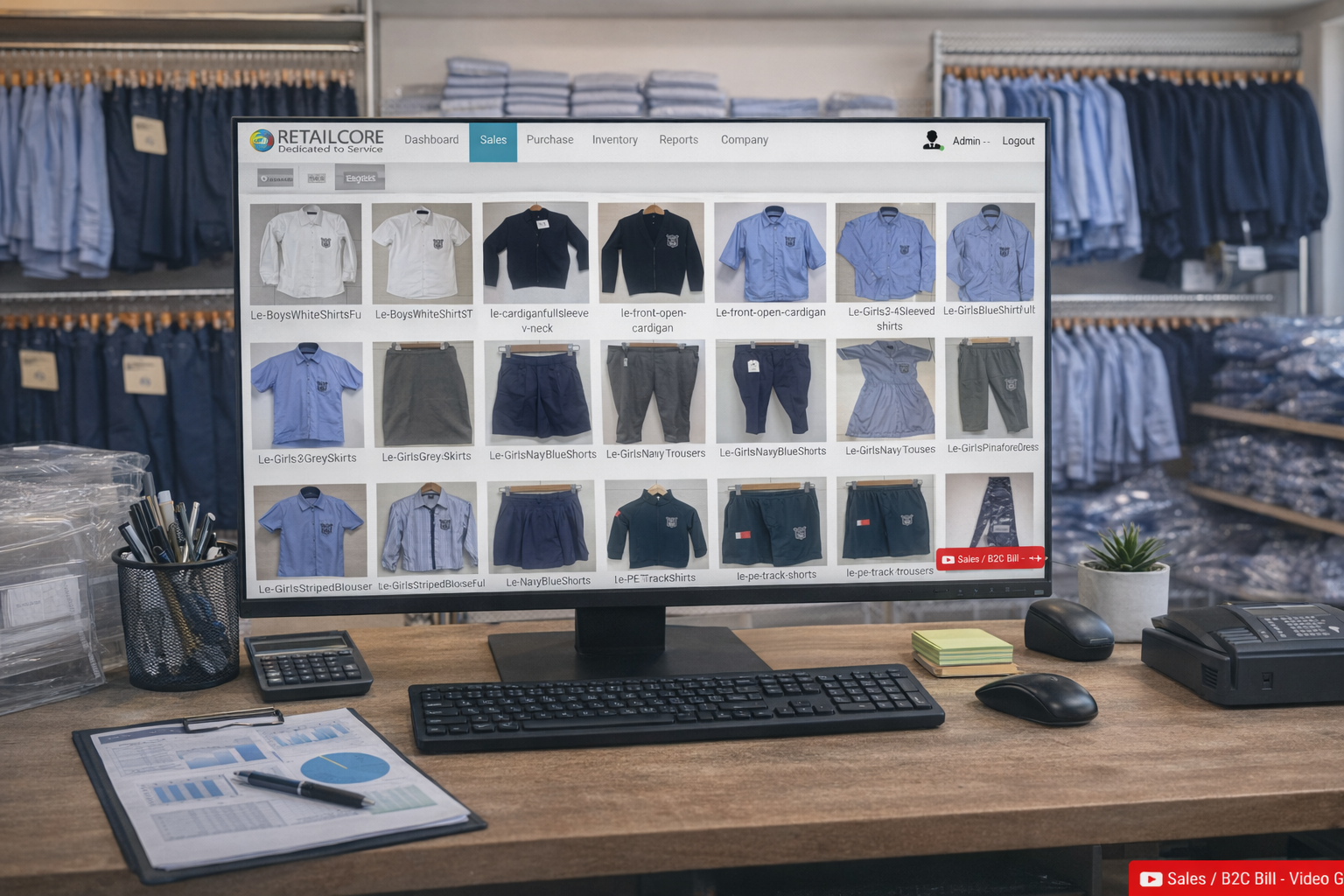
10 Reasons Retail Stores Accumulate Dead Stock
Dead stock rarely happens because of a single mistake. In most retail businesses, it develops gradually due to poor planning, lack of inventory visibility, inaccurate purchasing decisions, and changing customer preferences.
Understanding these common causes allows retailers to take preventive measures before excess inventory begins affecting profitability and cash flow.
1. Purchasing Products Without Sales Data
Many retailers rely on assumptions, supplier recommendations, or personal preferences when purchasing inventory instead of analyzing historical sales data.
Buying large quantities without understanding customer demand often results in products remaining unsold for months.
Best Practice
Always review previous sales reports before placing purchase orders. Identify products that consistently perform well and avoid investing heavily in slow-selling items.
2. Overstocking Seasonal Products
Seasonal products such as winter clothing, festive decorations, school supplies, or holiday gift items have limited selling periods.
If retailers overestimate demand, the remaining inventory quickly becomes difficult to sell after the season ends.
| Season | Example Dead Stock |
|---|---|
| Winter | Jackets, sweaters, blankets |
| Diwali | Decorative lighting, gift packs |
| School Opening | School bags, stationery kits |
| Christmas | Decorations and gift items |
3. Lack of Barcode Inventory Management
Retailers managing inventory manually often lose visibility into stock movement.
Without barcode scanning, businesses cannot accurately determine:
- Fast-moving products
- Slow-moving products
- Products that have not sold for months
- Duplicate purchases
- Inventory ageing
Barcode inventory management provides accurate, real-time information that helps retailers make informed purchasing decisions.
4. Poor Demand Forecasting
Customer preferences constantly change due to fashion trends, local demand, weather, pricing, and competition.
Retailers who continue ordering inventory based on previous assumptions instead of recent sales data often accumulate unsold stock.
Retail Tip
Review product sales every month instead of every year. Small adjustments in purchasing can significantly reduce future dead stock.
5. No Inventory Ageing Analysis
Inventory ageing reports show how long products remain in stock.
Without regularly reviewing inventory age, retailers may not realize certain products have been sitting on shelves for six months or even a year.
| Inventory Age | Recommended Action |
|---|---|
| 0–30 Days | Normal Sales |
| 31–90 Days | Monitor Sales Trend |
| 91–180 Days | Plan Promotions |
| 180+ Days | Clearance, Bundle, Transfer or Liquidate |
6. Purchasing Large Quantities for Supplier Discounts
Many suppliers offer attractive discounts for bulk purchases.
Although the purchase price may be lower, buying excessive quantities without sufficient customer demand often results in inventory remaining unsold.
A small discount during purchasing can become a much larger financial loss if products remain unsold for several months.
7. Ignoring Slow-Moving Products
Many retailers focus only on top-selling products.
Unfortunately, products with declining sales often receive little attention until they become dead stock.
Regular inventory reports help identify products that require promotional campaigns before they stop selling completely.
8. Ineffective Product Display
Sometimes products fail to sell not because customers dislike them, but because customers simply do not notice them.
Improving product placement, store layout, lighting, and visual merchandising can significantly increase sales without reducing prices.
9. Incorrect Pricing Strategy
Pricing products too high compared to competitors can slow sales dramatically.
Conversely, pricing products too low may reduce profit margins unnecessarily.
Regular competitor analysis and sales reports help retailers optimize pricing decisions.
10. No Regular Stock Audit
Retailers who never conduct physical inventory verification often discover discrepancies only after major losses occur.
Regular stock audits help identify damaged products, misplaced inventory, duplicate purchases, and slow-moving stock before they become expensive problems.
RetailCore Advantage
RetailCore simplifies stock audits using barcode scanning, allowing retailers to verify inventory quickly and accurately while generating reports that highlight inventory discrepancies.
Case Study 1: Boutique in Surat
A women’s fashion boutique introduced an extensive collection of designer handbags before the festive season.
Sales were initially strong, but nearly 35% of the inventory remained unsold after customer preferences shifted toward newer designs.
Without inventory reports, the owner continued purchasing similar products the following season.
After implementing barcode inventory management and reviewing product-wise sales reports, the boutique identified slow-moving categories much earlier.
Future purchases were adjusted based on demand, resulting in improved inventory turnover and healthier cash flow.
Case Study 2: Cosmetics Store in Bengaluru
A cosmetics retailer stocked large quantities of imported skincare products based on supplier recommendations.
Several premium products remained unsold because customer demand favored more affordable alternatives.
Using inventory ageing reports, the retailer launched promotional offers before products approached expiry.
This reduced inventory losses and freed shelf space for products with stronger sales performance.
Case Study 3: Gift Shop in Ahmedabad
A gift shop consistently purchased decorative items in bulk before festivals.
After each festive season, significant quantities remained unsold.
Instead of heavily discounting individual products, the retailer created attractive gift bundles combining slow-moving products with popular items.
Bundle sales increased significantly, helping recover inventory value while improving customer satisfaction.
Warning Signs Your Store Is Creating Dead Stock
- Products remain unsold for more than 90 days.
- Warehouse shelves continue becoming fuller.
- You frequently purchase the same products without reviewing sales history.
- Customers repeatedly ask for products that are out of stock while slow-moving products remain available.
- Cash flow feels tight despite healthy sales.
- Frequent discount campaigns are required to clear old inventory.
- Your purchasing decisions rely on estimates instead of sales reports.
- You cannot quickly identify your top 20 slowest-selling products.
How RetailCore Helps Reduce Dead Stock
RetailCore provides retailers with powerful inventory management tools that help prevent excess inventory before it becomes dead stock. With barcode-based inventory tracking, inventory ageing reports, product-wise sales analysis, category performance reports, purchase management, stock audit features, barcode label generation, and multi-store inventory management, retailers gain complete visibility into stock movement and make more informed purchasing decisions.
Instead of reacting after inventory problems occur, RetailCore enables retailers to identify slow-moving products early, optimize purchasing, improve inventory turnover, and maintain healthy cash flow throughout the year.
Frequently Asked Questions (FAQs)
1. What is dead stock in retail?
Dead stock refers to inventory that has remained unsold for a long period and has little or no customer demand. It ties up working capital, occupies storage space, and reduces business profitability.
2. How is dead stock different from slow-moving inventory?
Slow-moving inventory still sells occasionally, whereas dead stock has almost stopped selling and usually requires discounts, bundle offers, transfers, or clearance sales.
3. What causes dead stock in retail stores?
Dead stock commonly results from over-purchasing, poor demand forecasting, seasonal buying mistakes, lack of barcode inventory management, inaccurate inventory records, pricing issues, and changing customer preferences.
4. Why is dead stock harmful for cash flow?
Money invested in unsold products cannot be used to purchase fast-selling inventory, expand the business, or meet daily operating expenses. This directly affects business liquidity and growth.
5. How can retailers identify dead stock?
Retailers should regularly review inventory ageing reports, product-wise sales reports, inventory turnover, and stock movement to identify products that remain unsold for extended periods.
6. Can barcode inventory management reduce dead stock?
Yes. Barcode inventory management improves inventory accuracy, tracks product movement in real time, and helps retailers identify slow-selling products before they become dead stock.
7. What industries are most affected by dead stock?
Dead stock affects almost every retail business including boutiques, jewellery stores, footwear shops, toy stores, supermarkets, gift shops, cosmetics retailers, dry fruit stores, electronics retailers, and home décor businesses.
8. What are the warning signs of increasing dead stock?
Common warning signs include declining inventory turnover, increasing warehouse occupancy, frequent discounting, slow-moving products older than 90 days, and reduced cash flow despite consistent sales.
9. How can retailers reduce dead stock?
Retailers can reduce dead stock by improving purchasing decisions, using barcode inventory systems, monitoring inventory ageing, creating bundle offers, transferring inventory between stores, and running targeted promotions.
10. Does RetailCore help manage dead stock?
Yes. RetailCore provides barcode inventory management, inventory ageing reports, product-wise sales analysis, stock audit tools, purchase management, reorder level monitoring, and business reports that help retailers minimize dead stock and improve cash flow.
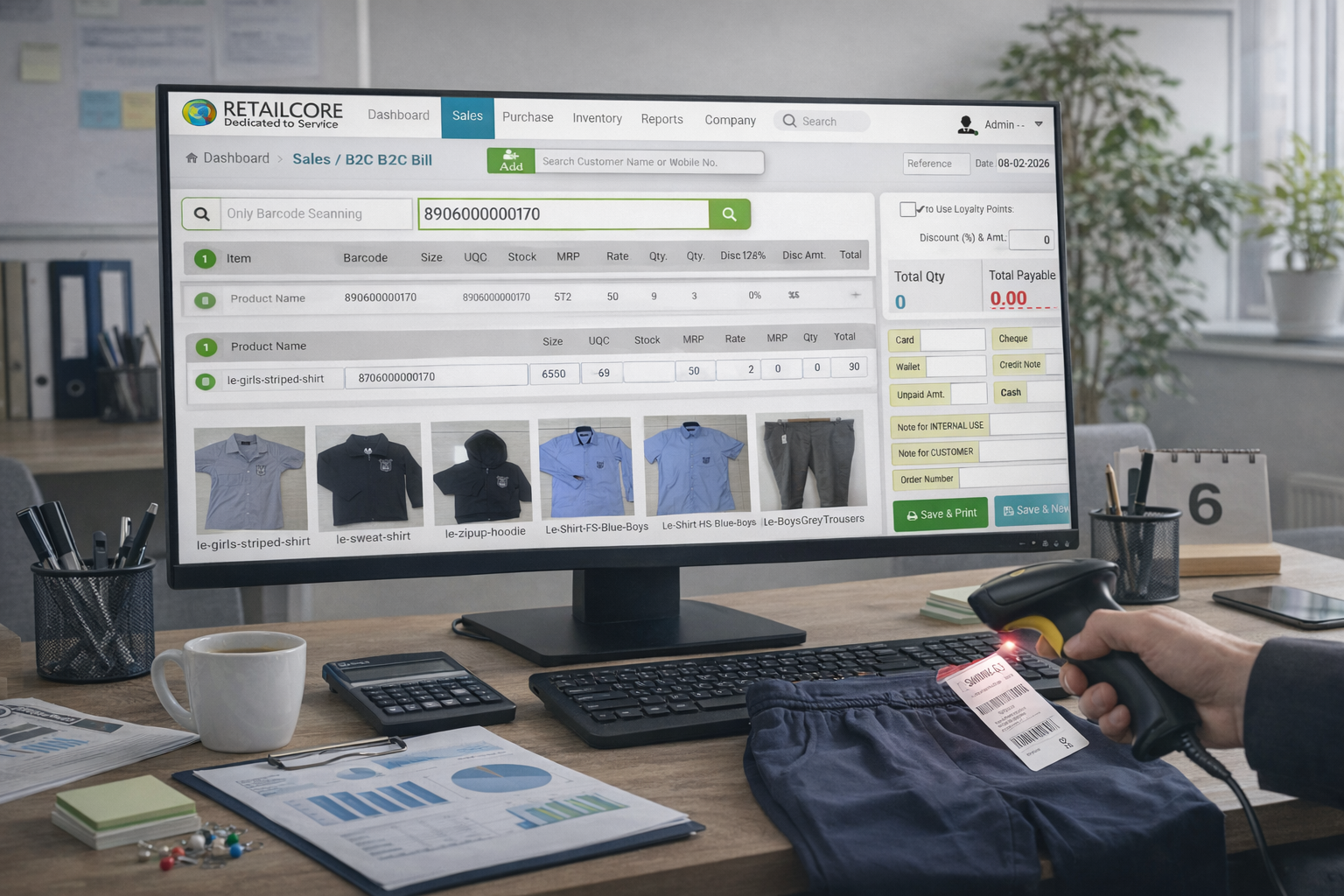
How Much Can Slow Billing Cost Your Business?
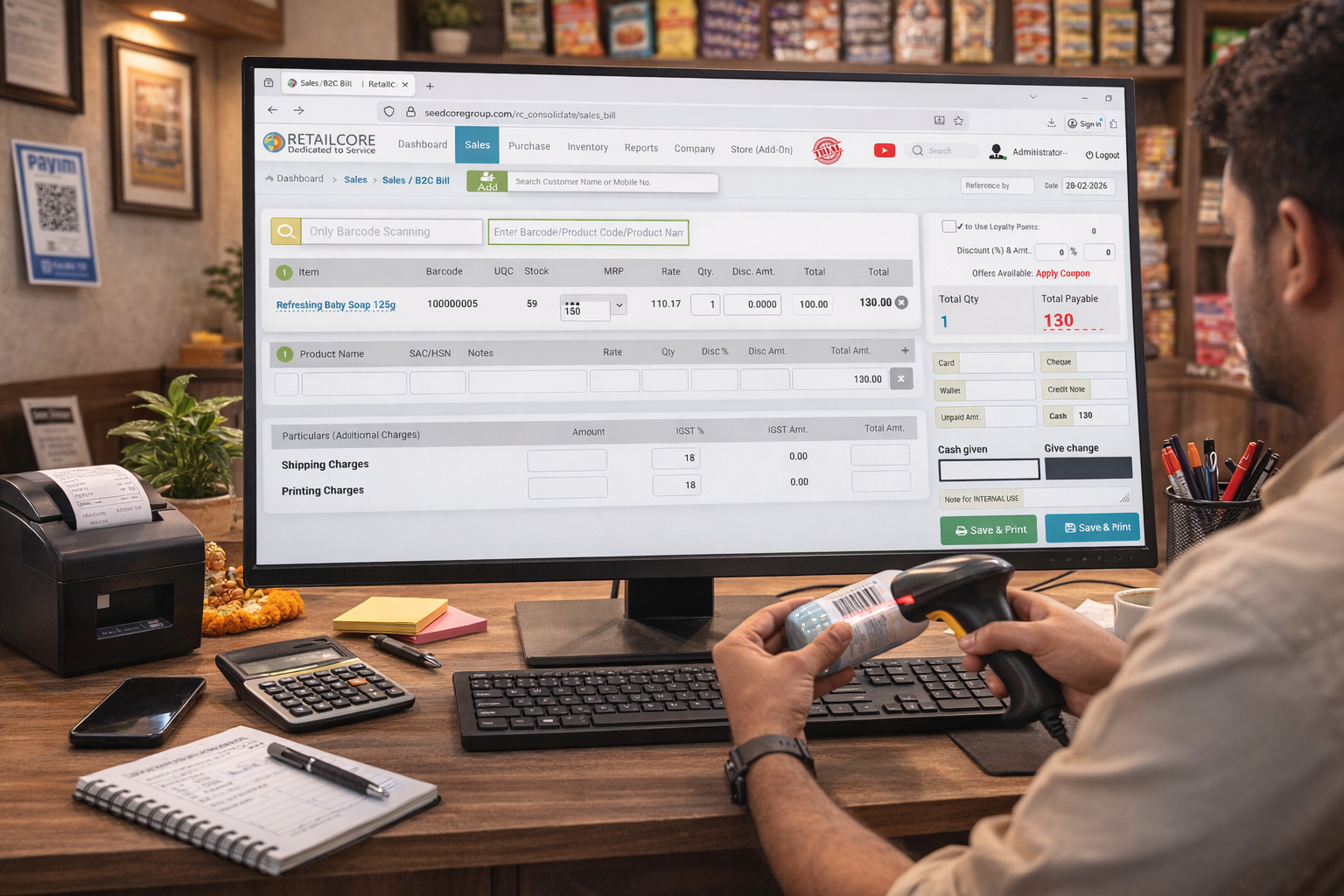
Why Fast Billing Is More Important Than Discounts for Retail Stores