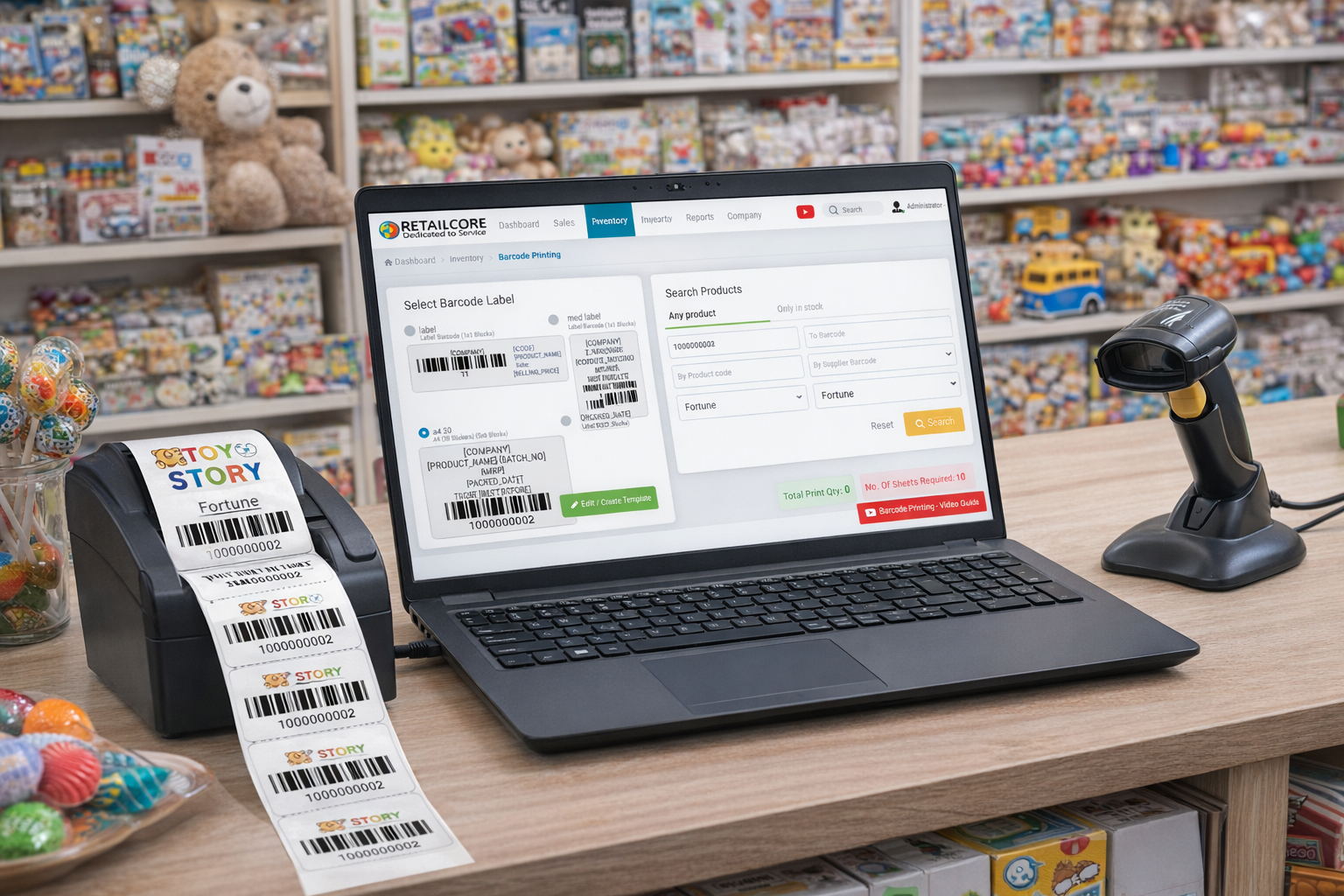
Every successful retailer understands that preventing dead stock is far easier than trying to sell products that customers no longer want.
The most profitable retail businesses do not simply purchase more inventory—they purchase smarter, monitor inventory continuously, and make decisions based on accurate sales data.
The following strategies are used by successful boutiques, jewellery stores, supermarkets, cosmetics retailers, toy stores, footwear retailers, gift shops, home décor stores, and multi-store retail chains to maintain healthy inventory levels while improving profitability.
1. Purchase Based on Sales History Instead of Assumptions
One of the most common reasons retailers accumulate dead stock is purchasing based on assumptions rather than actual customer demand.
Before placing every purchase order, review:
- Previous year’s sales
- Monthly sales trends
- Fast-moving products
- Seasonal demand
- Category performance
- Best-selling brands
Sales reports reveal which products consistently perform well and which should no longer receive large purchase orders.
Businesses using historical sales data generally make more confident purchasing decisions while reducing unnecessary inventory investments.
RetailCore Insight
RetailCore automatically maintains complete product-wise sales history, making it easy to compare daily, monthly, seasonal, and yearly sales before creating purchase orders.
2. Define Reorder Levels for Every Product
Many retailers purchase inventory only after products become unavailable.
Others purchase too early.
Neither approach is ideal.
A reorder level ensures products are replenished at the right time while avoiding excessive inventory.
| Without Reorder Levels | With Reorder Levels |
|---|---|
| Frequent stock-outs or overstocking | Balanced inventory throughout the year |
| Emergency purchasing | Planned purchasing |
| Higher purchasing costs | Better cash flow management |
3. Monitor Inventory Age Every Month
Products should never remain unnoticed on shelves for several months.
A monthly inventory ageing review helps retailers identify products before they become dead stock.
Retailers should classify inventory into ageing groups such as:
- 0–30 Days
- 31–90 Days
- 91–180 Days
- More than 180 Days
Products remaining unsold beyond acceptable limits should immediately be considered for promotions, bundle offers, branch transfers, or clearance campaigns.
4. Conduct Regular Physical Stock Audits
Inventory records should always match physical inventory.
Without regular stock verification, retailers often discover inventory discrepancies only after financial losses occur.
Routine stock audits help identify:
- Missing products
- Damaged inventory
- Duplicate purchases
- Incorrect stock balances
- Products stored in the wrong location
Best Practice
Instead of performing one large annual stock audit, conduct smaller barcode-based audits every month for better inventory accuracy.
5. Use Bundle & Combo Offers to Move Slow Inventory
Not every slow-moving product requires a discount.
Instead, retailers can combine slower products with fast-selling products to create attractive bundle offers.
This approach increases average bill value while reducing ageing inventory.
For example:
- Handbag + Wallet
- Shampoo + Conditioner
- Toy + Puzzle
- Bedsheet + Cushion Cover
- Gift Mug + Greeting Card
- Kurti + Dupatta
Customers perceive greater value while retailers recover inventory investment more effectively than through heavy markdowns alone.
RetailCore Bundle Management
RetailCore allows retailers to create unique bundle barcodes while automatically deducting inventory from individual products when the bundle is sold. This simplifies inventory tracking without creating duplicate stock records.
6. Transfer Inventory Between Branches
Retail chains often experience different buying patterns across locations.
A product that sells slowly in one city may sell quickly in another.
Rather than purchasing additional inventory for one branch while another branch holds excess stock, retailers should transfer inventory internally.
This strategy:
- Reduces unnecessary purchasing
- Improves inventory utilization
- Lowers warehouse costs
- Improves overall inventory turnover
7. Run Targeted Promotions Instead of Store-Wide Discounts
Offering discounts across the entire store reduces profitability.
Instead, retailers should identify slow-moving categories and create focused promotional campaigns.
Examples include:
- Buy One Get One
- Weekend Specials
- Festival Promotions
- Member Exclusive Offers
- Combo Discounts
- Clearance Sections
Targeted promotions preserve margins on fast-selling products while helping older inventory move more quickly.
8. Improve Product Merchandising
Sometimes products remain unsold because customers never notice them.
Simple merchandising improvements can significantly improve product visibility.
- Place best-margin products at eye level.
- Create attractive product displays.
- Rotate inventory regularly.
- Highlight new arrivals.
- Create themed collections.
- Display complementary products together.
Many retailers increase sales without changing prices simply by improving product presentation.
Inventory Doesn’t Improve by Chance—It Improves Through Visibility
Every barcode scanned, every sale recorded, and every purchase analyzed tells a story about your business.
RetailCore transforms everyday retail transactions into meaningful insights that help you purchase smarter, reduce ageing inventory, and improve cash flow.
How Progressive Retailers Stay Ahead
Retailers who consistently maintain healthy cash flow rarely depend on luck. They review inventory reports, monitor ageing products, analyze customer buying patterns, and adjust purchasing decisions before inventory problems become expensive.
Whether you manage one store or multiple retail locations, making inventory decisions based on reliable business data helps reduce risk, improve profitability, and build a stronger retail operation.
With RetailCore, retailers gain access to barcode inventory management, inventory ageing reports, product-wise sales analysis, purchase management, stock audits, bundle management, multi-store inventory tracking, and actionable business reports—all from a single integrated platform.
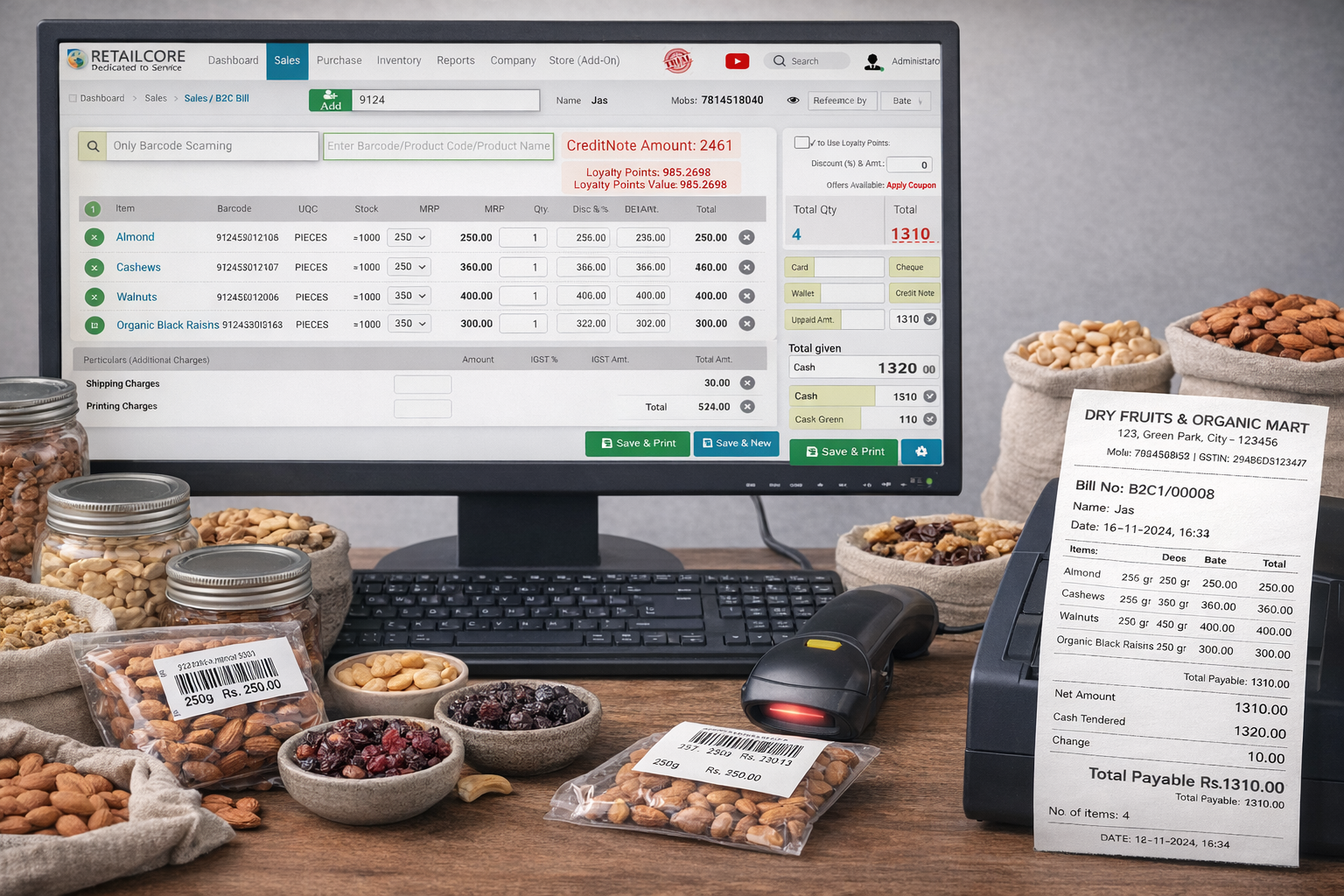
Continue Improving Inventory Performance with These Advanced Strategies
Reducing dead stock is not simply about clearing old inventory. It requires a systematic approach that combines purchasing discipline, inventory visibility, customer insights, and continuous improvement.
The following strategies help successful retailers build a healthier inventory system that supports long-term profitability.
9. Forecast Demand Using Historical Sales Trends
Demand forecasting allows retailers to estimate future product requirements using historical sales, seasonal trends, customer buying behaviour, festivals, weather conditions, and local market demand.
Instead of relying solely on supplier recommendations, retailers should analyse previous years’ sales before making purchasing decisions.
Accurate forecasting helps reduce excess inventory while ensuring popular products remain available.
10. Review Slow-Moving Products Every Month
Every month, identify products that have experienced little or no sales activity.
Ask questions such as:
- Can pricing be adjusted?
- Should the product be bundled?
- Should inventory be transferred to another branch?
- Can the product be promoted through WhatsApp or SMS campaigns?
- Should purchasing be discontinued?
Monthly reviews prevent products from silently becoming dead stock.
11. Build Strong Supplier Relationships
Suppliers play an important role in inventory management.
Retailers who maintain strong relationships can often negotiate:
- Smaller order quantities
- More frequent deliveries
- Better payment terms
- Product exchange options
- Seasonal purchasing flexibility
Flexible purchasing significantly reduces inventory risk.
12. Understand Customer Buying Behaviour
Customer purchase history provides valuable insights into shopping patterns.
Retailers should identify:
- Frequently purchased products
- Seasonal buying behaviour
- Repeat customers
- Popular brands
- Preferred price ranges
Businesses that understand customer preferences make better purchasing decisions and reduce inventory waste.
13. Eliminate Duplicate Purchasing
Duplicate purchasing often occurs when multiple employees order inventory without complete visibility into existing stock.
Barcode inventory systems provide accurate stock information before purchase orders are created, helping retailers avoid unnecessary inventory accumulation.
14. Train Employees on Inventory Best Practices
Technology alone cannot solve inventory problems.
Employees should understand:
- Barcode scanning procedures
- Stock receiving process
- Inventory transfers
- Stock audits
- Product categorisation
- Purchase approval procedures
Well-trained employees contribute directly to inventory accuracy.
15. Use Business Reports to Make Every Inventory Decision
Modern retailers no longer rely on intuition.
Every purchasing decision should be supported by reports including:
- Product-wise Sales Report
- Category Performance Report
- Fast Moving Inventory Report
- Slow Moving Inventory Report
- Inventory Ageing Report
- Purchase Analysis Report
- Supplier Performance Report
- Gross Profit Report
Reports transform inventory management from guesswork into informed business decision-making.
10 Common Inventory Mistakes Retailers Should Avoid
| Mistake | Better Practice |
|---|---|
| Buying inventory without reviewing sales reports | Purchase using historical sales data |
| Manual inventory tracking | Barcode inventory management |
| Ignoring inventory ageing | Review ageing reports monthly |
| Purchasing because of supplier discounts | Purchase according to demand |
| No stock audits | Regular barcode-based verification |
| No reorder planning | Use reorder levels |
| Store-wide discounts | Target slow-moving products only |
| No bundle offers | Bundle complementary products |
| Ignoring customer buying behaviour | Analyse purchase history regularly |
| Managing inventory by intuition | Use reports and KPIs |
The Future of Inventory Management
Retail inventory management continues to evolve rapidly.
Modern retail businesses are increasingly adopting technologies that improve forecasting accuracy, inventory visibility, and operational efficiency.
Emerging trends include:
- AI-assisted demand forecasting
- Predictive purchasing recommendations
- Real-time cloud inventory monitoring
- Mobile barcode scanning
- Automated reorder alerts
- Photo-based inventory management
- Integrated CRM and inventory analytics
- Centralised multi-store inventory management
Retailers who embrace data-driven inventory management today will be better prepared for future market changes and customer expectations.
How RetailCore Helps Retailers Reduce Dead Stock
RetailCore combines barcode inventory management, intelligent reporting, purchase management, stock audits, bundle management, inventory ageing analysis, CRM, multi-store inventory control, and retail analytics into a single platform.
Whether you operate one retail outlet or a growing retail chain, RetailCore provides the visibility needed to make smarter purchasing decisions and maintain healthier cash flow.
- Barcode Inventory Management
- Barcode Label Generation & Printing
- Inventory Ageing Reports
- Fast & Slow Moving Inventory Reports
- Purchase & Supplier Management
- Stock Audit Module
- Bundle & Combo Inventory Management
- Customer Purchase History
- Multi-Store Inventory Transfers
- Retail Business Dashboards
Transform Your Inventory into a Competitive Advantage
Every unsold product represents an opportunity to improve your business.
With better inventory visibility, smarter purchasing decisions, and actionable business reports, you can reduce dead stock, improve cash flow, increase profitability, and create a more efficient retail operation.
Take the next step toward better inventory management.
Continue Learning Retail Management
Explore more practical guides from RetailCore to strengthen your retail operations:
- Complete Guide to Barcode Inventory Management
- Why Fast Billing Is More Important Than Discounts
- Bundle & Combo Inventory Management for Retail Stores
- How Barcode Labels Improve Retail Accuracy
- Retail KPIs Every Business Owner Should Monitor
- How to Conduct a Physical Stock Audit
- Multi-Store Inventory Management Best Practices
- How Customer Purchase History Increases Repeat Sales
Final Thoughts
Dead stock is not simply an inventory issue—it is a business performance issue. Excess inventory reduces cash flow, limits growth opportunities, increases operating costs, and prevents retailers from responding quickly to changing customer demand.
The most successful retailers treat inventory as a strategic asset. They analyse sales trends, monitor inventory ageing, perform regular stock audits, optimise purchasing, and use reliable business reports to guide every decision.
By implementing the strategies discussed in this guide and adopting modern inventory management practices, retailers can reduce dead stock, improve inventory turnover, strengthen cash flow, and build a more profitable business for the long term.
Frequently Asked Questions (FAQs)
1. What is dead stock in retail?
Dead stock is inventory that remains unsold for a long period and has little or no customer demand. It occupies valuable storage space, locks working capital, and reduces overall profitability.
2. How is dead stock different from slow-moving inventory?
Slow-moving inventory continues to sell occasionally, while dead stock has almost stopped selling completely and usually requires promotions, bundle offers, transfers, or clearance sales.
3. Why does dead stock occur?
Dead stock commonly results from over-purchasing, inaccurate demand forecasting, seasonal buying mistakes, poor inventory visibility, duplicate purchasing, changing customer preferences, and lack of inventory analysis.
4. How does dead stock affect cash flow?
Money invested in unsold products cannot be used to purchase fast-selling inventory, pay suppliers, expand the business, or improve customer service, leading to reduced liquidity.
5. How can retailers identify dead stock?
Retailers should review inventory ageing reports, product-wise sales reports, inventory turnover, category performance, and stock movement history to identify products with little or no sales.
6. What is inventory ageing?
Inventory ageing measures how long products remain in stock before being sold. Monitoring inventory age helps retailers identify slow-moving products before they become dead stock.
7. What is Inventory Turnover Ratio?
Inventory Turnover Ratio measures how often inventory is sold and replenished during a specific period. A higher ratio usually indicates efficient inventory management and healthier cash flow.
8. What are ABC and XYZ inventory analyses?
ABC Analysis categorizes products according to business value, while XYZ Analysis classifies products based on demand consistency. Together, they help retailers prioritize purchasing and inventory planning.
9. Can barcode inventory management reduce dead stock?
Yes. Barcode inventory management provides real-time inventory visibility, accurate stock tracking, and detailed reports that help retailers identify slow-moving products early and improve purchasing decisions.
10. How often should retailers perform stock audits?
Most retailers should perform inventory audits monthly or quarterly, while fast-moving businesses may conduct barcode-based stock verification more frequently.
11. Are bundle offers effective for reducing dead stock?
Yes. Combining slow-moving products with popular products in bundle offers can increase sales, improve average bill value, and reduce ageing inventory without relying on heavy discounts.
12. Why are inventory reports important?
Inventory reports provide valuable insights into sales trends, inventory ageing, stock movement, purchasing performance, and category profitability, enabling retailers to make informed business decisions.
13. Which retail businesses benefit from better inventory management?
Effective inventory management benefits boutiques, jewellery stores, footwear retailers, cosmetics stores, gift shops, supermarkets, toy stores, electronics retailers, dry fruit shops, home décor stores, and multi-store retail businesses.
14. How does RetailCore help reduce dead stock?
RetailCore provides barcode inventory management, inventory ageing reports, stock audit tools, bundle management, purchase management, reorder level monitoring, category-wise analysis, product-wise sales reports, CRM, and multi-store inventory management to help retailers reduce dead stock and improve cash flow.
15. What is the best way to prevent dead stock?
The best approach combines demand forecasting, historical sales analysis, barcode inventory management, regular inventory reviews, accurate purchasing, stock audits, and continuous monitoring of inventory KPIs.
15 Proven Strategies to Reduce Dead Stock and Improve Cash Flow
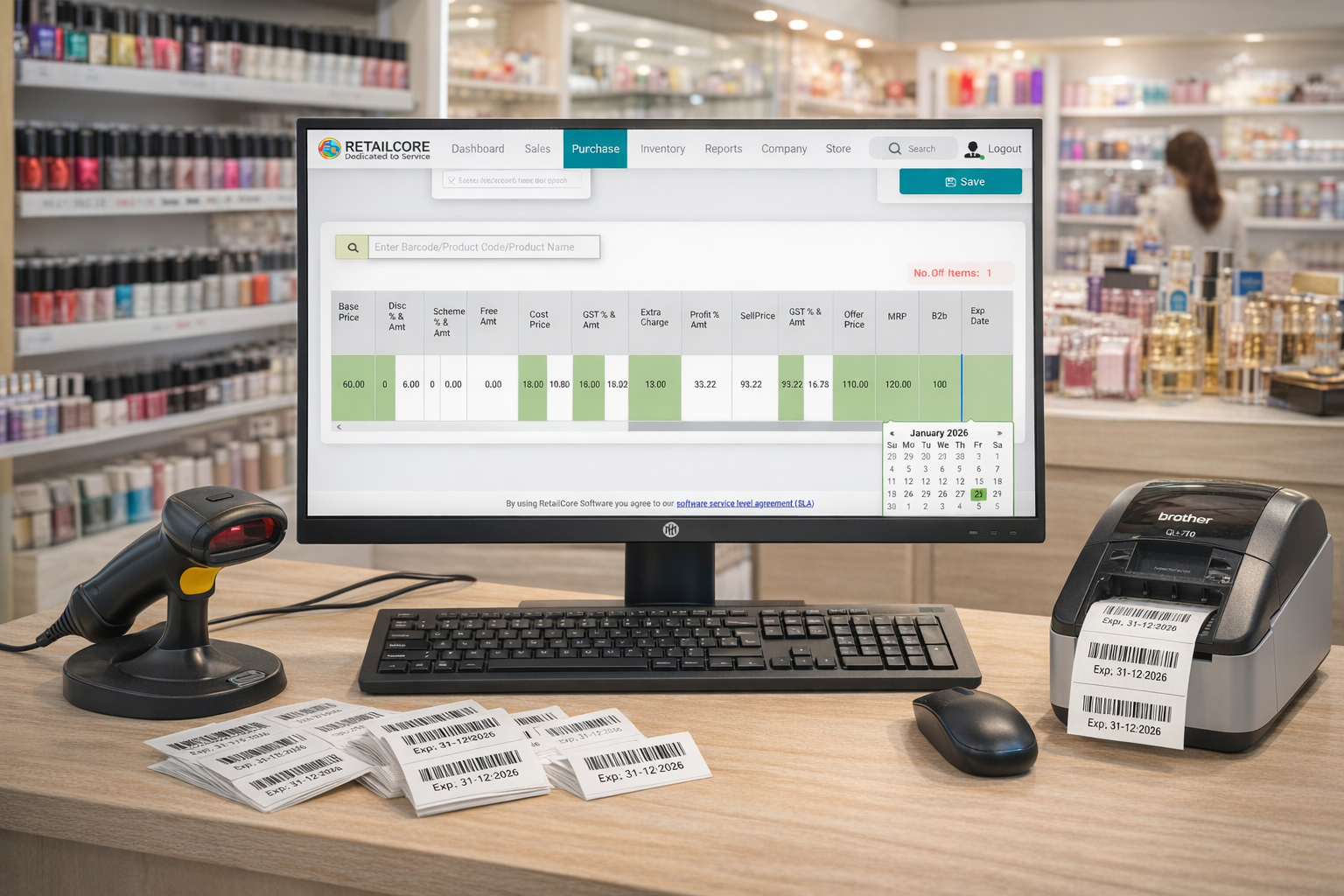
Retail Inventory KPIs: Inventory Turnover, ABC Analysis & Dead Stock Management | RetailCore